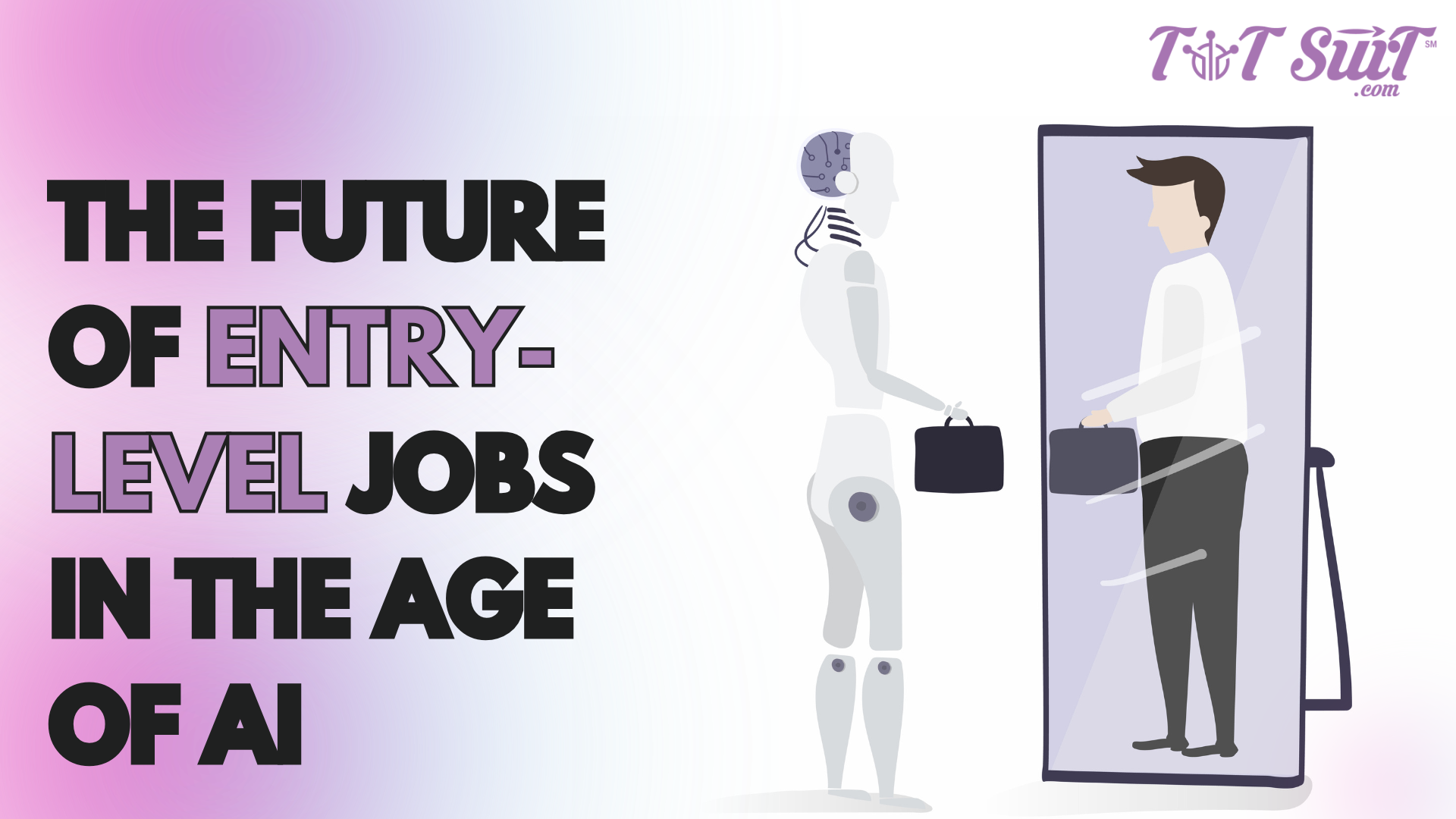
Artificial intelligence is transforming the workplace at breakneck speed, and few of the changes are more challenging than its impact on entry-level employment. Junior roles have long served as the training ground for young professionals, offering valuable experience, training, and a pathway to long-term career growth. Today, however, companies are reconfiguring many of these roles and, in some cases, replacing them with AI-powered tools.
This ain’t some faraway possibility. It’s happening already. It’s a trend.
Why entry-level jobs are coming under the knife
Many entry-level jobs require repetitive, predictable tasks, such as data entry, basic research, customer support, scheduling, content drafting, and administrative work. This is exactly the type of thing that modern AI systems can do fast and at a lower cost.
The number of companies using AI to increase efficiency, cut operational costs and automate routine workflows is on the rise. This opens new opportunities for innovation but also reduces the number of traditional entry-level jobs that once allowed workers to gain experience.
The result is a growing concern: If young professionals can’t secure entry-level jobs, how will they earn the skills to fill senior positions down the road?
The skills that will count most
AI can automate tasks, but it cannot entirely replace human judgment, creativity, leadership, emotional intelligence and complex problem solving. The labor market is changing, and employers are now interested in skills that complement technology, not compete with it.
The most resilient professionals will concentrate on developing:
• Critical thinking and decision making
• Communication and working with others
• Digital literacy and AI fluency
• Creativity and creative
• Project management & leadership
• Industry knowledge
Knowing how to work with AI will be as important as learning traditional technical skills.
A new approach for young talents
Job seekers shouldn’t be afraid of AI. They can instead use it to boost productivity and find new career paths.
Having a strong portfolio, gaining experience through freelance work, internships, personal projects, and ongoing learning can help candidates stand out in an increasingly competitive market.
Employers are starting to place more value on actual skills than on formal credentials alone. Often, people who can demonstrate real-world results have an edge, regardless of their formal education.
Business accountability
Companies have an important role to play in this transition. Automation can improve efficiency, but employers need to invest in training programs, apprenticeships and pathways for young workers to gain practical experience.
Companies that get the mix right between AI productivity and building human talent will be well-positioned for long-term success.” After all, today’s entry-level employees are tomorrow’s managers, specialists and executives.
While cutting too many junior roles may save money in the short-term, it could also lead to a shortfall of experienced professionals in the future.
What governments and educational institutions can do
Policymakers and educational institutions must respond to the changing workforce landscape. Technology is evolving faster than traditional education models.
Schools, universities and training centres should pay more attention to digital skills, AI literacy, entrepreneurship and lifelong learning. Public-private partnerships can also create new pathways to employment through internships, vocational programs, and workforce development initiatives.
We need to invest now in preparing people for the jobs of the future.
Looking ahead
Artificial intelligence is going to change the world economy in a way just like other technological changes have before. Some jobs will go away. New jobs and industries will come up.
The problem is not just getting used to intelligence. It is making sure that the next generation has chances to learn, grow and get jobs. If businesses, governments and individuals work together to try things and help people grow, then AI can make more opportunities for people instead of making it harder for them.
The future of work is happening now. The choices we make today will decide if AI helps everyone and makes the world a better place, or if it makes it harder for the generation to get ahead.