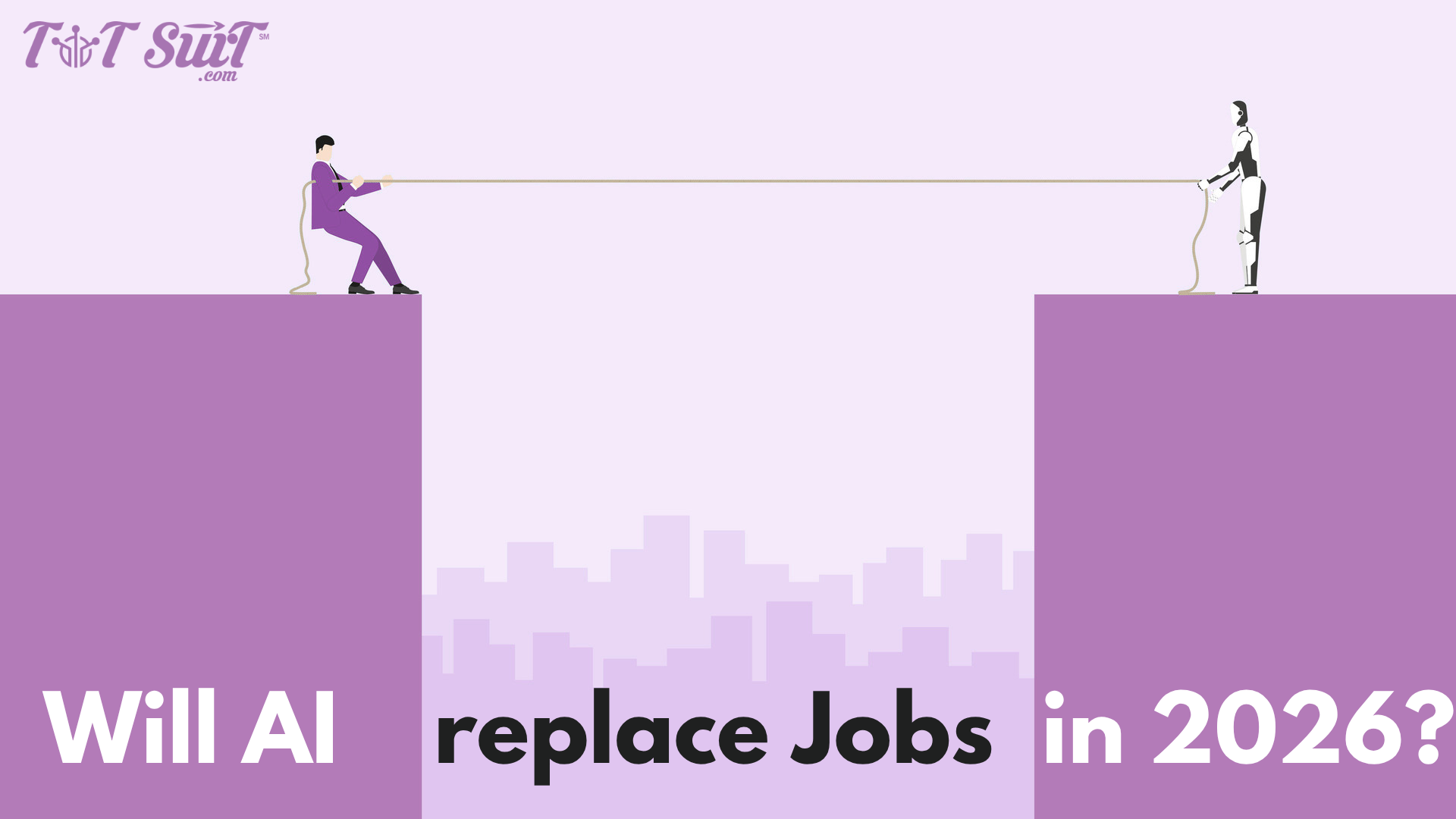
The question of whether artificial intelligence will replace jobs is no longer hypothetical. It’s now a key question for workers, companies and investors trying to make sense of what the next few years of the labor market will look like.
But what’s coming next is a widening gap between the current economic data and what industry leaders expect.
Is AI already killing jobs?

Despite fears of mass job destruction through automation, recent labor-market research does not show a clear and large-scale collapse in employment.
Overall, major economy employment trends, particularly in the U.S., still seem fairly stable. Some industries are adjusting, but there’s no universal indication of mass AI-caused job losses across the industry.
But the effect is patchy.
Some sectors are feeling the heat, particularly junior and entry-level roles in areas such as software development and customer service. While they may not have transformed the entire job market yet, these shifts could be a sign that AI is beginning to influence hiring decisions.
Where AI impact is already apparent?
Even before widespread job displacement, AI adoption is altering the way work gets done.
Companies are turning to AI tools more and more to:
• Automate digital repetitive work
• Support with coding and documentation
• Draft customer communication management
• Speed up analysis and content creation
Often, the objective is not complete replacement, but to reduce time and cost to complete tasks.
But when companies reorganise or trim back, AI is often cited as a reason, making it hard to distinguish whether it is the true driver of automation or just a convenient story for broader economic decisions.
Why 2026 will be a watershed for investors?
Labor data looks pretty steady today, but many investors feel the next big move is just around the corner.
In venture capital and enterprise tech circles, there’s a sense that around 2026, AI will evolve beyond a productivity tool and start to function as an “agentic” system—able to complete entire workflows with less human input.
If that happens, AI would no longer just help workers. It could start to replace whole classes of tasks.
Some investors also expect companies to adjust their budgets:
• Lower hiring growth
• More investment in AI systems
• Less reliance on manual labor for certain functions
Others are more cautious, saying real-world adoption will depend on trust, regulation and reliability – not just technical capability.
The actual change may already be in the works
One of the major tensions in today’s AI jobs debate is timing.
From a technical point of view, AI can already automate parts of many jobs. But the economic impact depends on how quickly businesses reorganize around that capability.
In the past, major technologies have not eliminated jobs overnight. Instead, they change workflows, change hiring patterns and change what skills are most valuable – but slowly.
Hence, two things can be true simultaneously:
• AI is already impacting some categories of jobs
• Overall labor market steady
What happens next?
The big question is not if artificial intelligence can do jobs that people do; it already does in a lot of areas, but how quickly will companies start using it everywhere?
If companies start using intelligence slowly, then the job market will probably adjust to the changes without any big problems. If they start using it really fast, especially with artificial intelligence systems that can work on their own, then it could have a big impact on who gets hired and what jobs are available.
Either way, the next few years will probably show us how much artificial intelligence will change the way people work.
This time it is different from when new technology came out in the past. People are watching to see what happens right now. Economists, companies, and workers are all trying to figure out when artificial intelligence will start doing jobs instead of just helping people do their jobs.